
+


Enterprise
Cloud Index
2018 Edition Application Requirements to Drive Hybrid Cloud Growth
Read The Study


say that the IT trend of hybrid cloud is having a positive impact on their businesses
of companies say that the mobility of the application between cloud environments is needed
of companies say that hybrid cloud is the ideal IT model for organizations
About This Report
In mid-2018, VansonBourne conducted research on behalf of Nutanix to gain insight into enterprise plans for adopting private, hybrid, and public clouds. The respondent base spanned multiple industries, business sizes, and geographies, which included the Americas; Europe, the Middle East, and Africa (EMEA); and Asia-Pacific (APJ) regions.
IT decision makers were interviewed globally

IT decision makers were asked:
- Where they are running their business applications today.
- Where they plan to run them in the future.
- What their cloud challenges are.
- How their cloud initiatives stack up against other IT projects and priorities.
Terminology.
- “Private cloud” is used in this report to refer to automated, highly virtualized installations of IT infrastructure managed by an organization’s own IT team.
- “Public cloud” indicates the use of an infrastructure-as-a-service (IaaS) offering managed by a third-party provider.
- “Hybrid cloud” describes the combined use of at least one private cloud and at least one public cloud service, with some degree of integration between the two cloud environments.
- “Multicloud” is referenced in this report to indicate the use of more than one public cloud service.
Summary and Key Findings
Today, enterprise IT teams decide where to run a given business application based on factors that include the economics, regulatory compliance, performance, availability, and security of the available infrastructure options. The enterprises surveyed for this report clearly indicated that their use of both private and public clouds would rise sharply during the next 12 to 24 months.
At the same time, they indicated that they would like to see improvements in application mobility and interoperability among cloud environments for greater flexibility in matching applications to the most appropriate infrastructure.
They cited security and a scarcity of hybrid cloud skillsets as additional barriers to achieving these goals.
Enterprise workloads running in both private and public clouds are expected to jump nearly 20% in
2 yearsEnterprise workloads running in both private and public clouds

Hybrid clouds will see the most growth in that two-year timeframe.



Regionally, the Americas reported greater use of hybrid clouds now (22%) and within 12 months' time (31%). However, the two-year outlook has EMEA (43%) surpassing the Americas' hybrid plans (39%) and APJ (39%) catching up.

More hybrid cloud users reported that all their needs were being met (49%) than those using a single public cloud (37%).
97% of respondents said that being able to move applications easily between cloud environments is a requirement.
Factors in determining where enterprises will run their applications
The Hybrid Cloud's Appeal
The bullish outlook for hybrid cloud adoption is reflective of an IT landscape growing automated and flexible enough that enterprises have the choice to buy, build, or rent their IT infrastructure resources based on application requirements. As a result, enterprises have started taking an “application-first” approach to their cloud deployments and plans.
of respondents reported that the advent of cloud computing has increased the efficiency of their IT teams.
Optimum economics.
Using an application-first approach, enterprises will set up their applications to run, increasingly, in the most economically appropriate location. That location will be based largely on the predictability of the workload; that is, on enterprises’ confidence in knowing the volume of resources a given application will consume and for how long. These are the two factors driving cloud spend.
Interoperability between cloud types is the top benefit that respondents reported as drawing them to hybrid cloud computing. App mobility, consolidated cloud management, and burstability to support periods of high demand also figure prominently in enterprise cloud decisions.
Current and Near-Term Cloud Usage Plans
Interoperaility between cloud types
App mobility - ability to move applications back and forth
Consolidate/unify cloud management and operations
Burstabilty to support periods of high demand
Flexibility to choose the right cloud for each app to the use case
I can choose the best cost model for each workload
I can choose the best security and compliance model for my data
Prevent vendor lock-in
No primary benefits
Don't know
Hybrid plans to increase.
Their drive to optimize their cloud operations by matching applications to the appropriate cloud environment is a likely factor in enterprises’ plans to increase their hybrid cloud usage. While 18% of respondent organizations today use a hybrid cloud model, that number is set to increase to 26% in 12 months and to 41% in 12 to 24 months' time among the research base.
Current and Near-Term Cloud Usage Plans
Current
In 12-24 Months
Given the relative difficulty in moving enterprise-scale applications from one operating environment to another, the jump from 18% to 41% in two years’ time or less represents a significant increase, indicating that respondents consider the value of balancing their applications across private/public cloud environments to be substantial.
Building the Ideal IT Model
IT teams are fast discovering that workloads with predictable characteristics, such as the number of concurrent users, storage I/O requirements, and bandwidth consumption, often run most cost-effectively in a private cloud. It’s fairly straightforward to forecast the consumption needs of predictable workloads and to plan accordingly to add resources as needed to accommodate expected growth.
By contrast, unpredictable workloads, such as those supporting new customer services or those that are seasonal in nature, often run best in the public cloud. That’s because a public cloud is able to deliver greater IT resource elasticity to satisfy dynamic application requirements.
Choosing the right cloud.
The Nutanix Enterprise Cloud Index 2018 findings support these approaches. Respondents, for example, reported using private clouds most often for more predictable applications like data backup (54%) and internal databases (51%) and said they used the public infrastructure most often for less predictable mobile/digital (46%) and IoT (41%) applications.
Where Enterprises are Running their Applications
-
Traditional Datacenter
-
Private Cloud
-
Public Cloud
-
Not Sure/We Don't Have This
Database
Desktop & Application
Data backup & Recovery
Generalized Workload
Development & Testing
Data Analytics/ Business
Enterprise Applications
Digital Applications
Container & Microservices
Internet of Things
Serverless Applications
Interoperabilty on IT wish lists.
The ability to move applications between different cloud environments easily and inexpensively enables IT teams to better manage their cloud costs while still balancing management, security, and performance requirements.
said that being able to move applications easily between clouds is a requirement.
97%Another 61% of respondents ranked this capability as a primary benefit to adopting a hybrid cloud model.
However, technical barriers limit application mobility across clouds today, keeping enterprises from fully embracing the promised flexibility of hybrid cloud technologies. These challenges likely account for at least part of the disparity between 91% of respondents ranking hybrid cloud as the ideal IT model and today’s relatively low hybrid cloud penetration levels of just 18%.
Limited application mobility is a likely factor in the disparity between 91% of respondents citing hybrid cloud as the ideal IT model and current hybrid penetration levels of just 18%.
Why is application mobility important? In an IT landscape focused on the agility that comes with digital transformation and cloud computing, the best runtime environment for a given application could easily change on the fly. Fully realizing the promise of cloud computing technologies, then, means enabling IT teams to:
- Pick the right cloud environment for each application based on service, cost, and security requirements.
- Change the runtime environment for a given workload at any point in time, as application and/or business requirements change. One example might be moving to a different provider with cloud resources in time zones that are closer to an organization’s customer base for faster application response times.
- Avoid vendor lock-in.
Cloud interoperability and unified management.
When asked about the primary benefits of hybrid cloud, these were among the top responses. IT professionals are clearly seeking solutions that enable interoperability among different cloud operating environments, along with unification of IT operations.
These priorities also became evident when respondents were asked about their plans to shift their operating model from one that is data center-centric to a more hybrid architecture: while 41% of companies use traditional data centers and 18% use hybrid clouds today, within 24 months, that number will reverse to 18% using traditional data centers and 41% using hybrid clouds.
Multicloud Adoption Trends
A common hypothesis of how enterprises might avoid vendor lock-in is to use multiple public cloud offerings. While the survey data illustrated that this was indeed the case...

Growth in the number of companies planning to use more than one public cloud was modest, increasing from 12% currently to just 18% within two years.
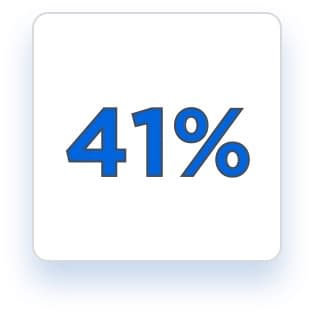
41% of companies plan to adopt hybrid cloud architectures in that time period.
This finding implies that some organizations will seek to avoid lock-in by making applications and data portable between the public cloud and their private cloud, rather than among multiple public clouds.
Pricey public clouds.
Another motivation for deploying hybrid clouds is likely enterprises’ need to get more control over IT spend. Organizations that use public cloud spend 26% of their annual IT budget on public cloud, according to the survey results, with this percentage set to increase to 35% in two years’ time. Most notable, however, is that only 6% of organizations that used public cloud services said they stayed under budget, while 35% overspent.
Enterprise Success with Managing Cloud Budgets
Stayed under budget
On budget
Over budget
As organizations become frustrated with their inability to forecast public cloud expenditures, they might increasingly migrate some applications back to their private cloud to gain better visibility and control over IT costs. What’s behind the budget forecasting inaccuracies with public cloud computing?
Shadow IT and other complications.
“Shadow IT” practices that circumvent enterprise IT teams pose a significant challenge to forecasting and controlling public cloud spend.
Reported one or more incidents of shadow IT
Because respondents can only report incidents that are known, it follows that the actual number may be far greater.
The core problem with shadow IT is that certain teams or departments might use cloud services that aren’t well-suited for their applications. In addition, those services can end up underutilized or abandoned while the company continues to be charged for them.
Other challenges with public cloud service forecasting has to do with complex and frequently changing pricing from the cloud service providers.
How Well Cloud Meets Enterprise Needs
A realization may be setting in that, while the public cloud is important alone, it’s not a panacea. Just over a third (37%) of companies using one public cloud reported having all their organizations’ needs met. The number was higher (43%) for those using multiple clouds, but the largest number of users that reported having all their needs met were in the group using hybrid clouds (49%).
Where improvements are needed.
Again, respondents indicated a need for greater orchestration and application mobility across cloud environments as they seek greater flexibility to move apps to the “right” cloud on a more dynamic basis.
More than half of the respondents said that data security/compliance, performance, management, and TCO are critical factors in deciding where to put their application workloads.
cited these same variables as challenges with adopting public cloud
>25%In other words, as is often the case with new IT solutions, the most important criteria are also the most difficult to achieve.
This data point underscores the shadow IT finding, as application developers and others bypass IT to consume potentially sub-optimal public cloud services and potentially put their organizations unknowingly at risk.
IT talent shortage.
While 88% of respondents expect that hybrid cloud will positively impact their business, hybrid cloud skills are scarce in today’s IT organizations. Hybrid cloud skills ranked second in scarcity only to skills in artificial intelligence and machine learning. Specialized skills focused on hybrid cloud are required, 74% of respondents said, because IT vendors currently do not provide the right hybrid cloud solutions, forcing IT experts to architect hybrid clouds using legacy technologies.
To make matters worse, over half (54%) of respondents agree that their organization has difficulty retaining IT talent.
Regionally, the Americas appeared to be doing a bit better in the IT skills department than EMEA and, especially APJ.
Here’s who Agrees or Strongly Agrees
| Americas | EMEA | APJ | |
|---|---|---|---|
| We lack the internal IT Skills | 0% | 0% | 0% |
| Difficulty retaining IT talent | 0% | 0% | 0% |
| Public cloud allows reduction of IT dept | 0% | 0% | 0% |
| Investing in reskilling out IT team | 0% | 0% | 0% |
Summary & Conclusions
As enterprises realize that not all applications and data belong in public cloud infrastructure, they are increasingly leaning toward hybrid clouds that combine private and public cloud services and their respective benefits.
A hybrid design ultimately allows applications and components to interoperate between clouds, making applications portable across runtime environments and reducing the risk of lock-in to a single cloud vendor. Hybrid cloud capabilities constitute a growing necessity in the dynamic, digital business climate, in which enterprises demand the freedom to dynamically provision and manage applications based on business needs.
Enterprises are also learning that where a given application is hosted today might not be the best place for it tomorrow. It comes as no surprise, then, that the vast majority of respondents, 91% identified hybrid cloud as the ideal IT model and that 97% cited application mobility among clouds as a necessity going forward.
As interoperability across cloud environments increases, with unified management and security policies that follow applications, enterprises are likely to achieve a better balance of cloud usage, improving their cloud economics and application performance, but without the current concerns that keep some applications trapped in traditional data centers. Reaching this ideal IT operating model will require more comprehensive hybrid vendor solutions, as well as greater expertise in designing, building, and operating hybrid clouds.
